
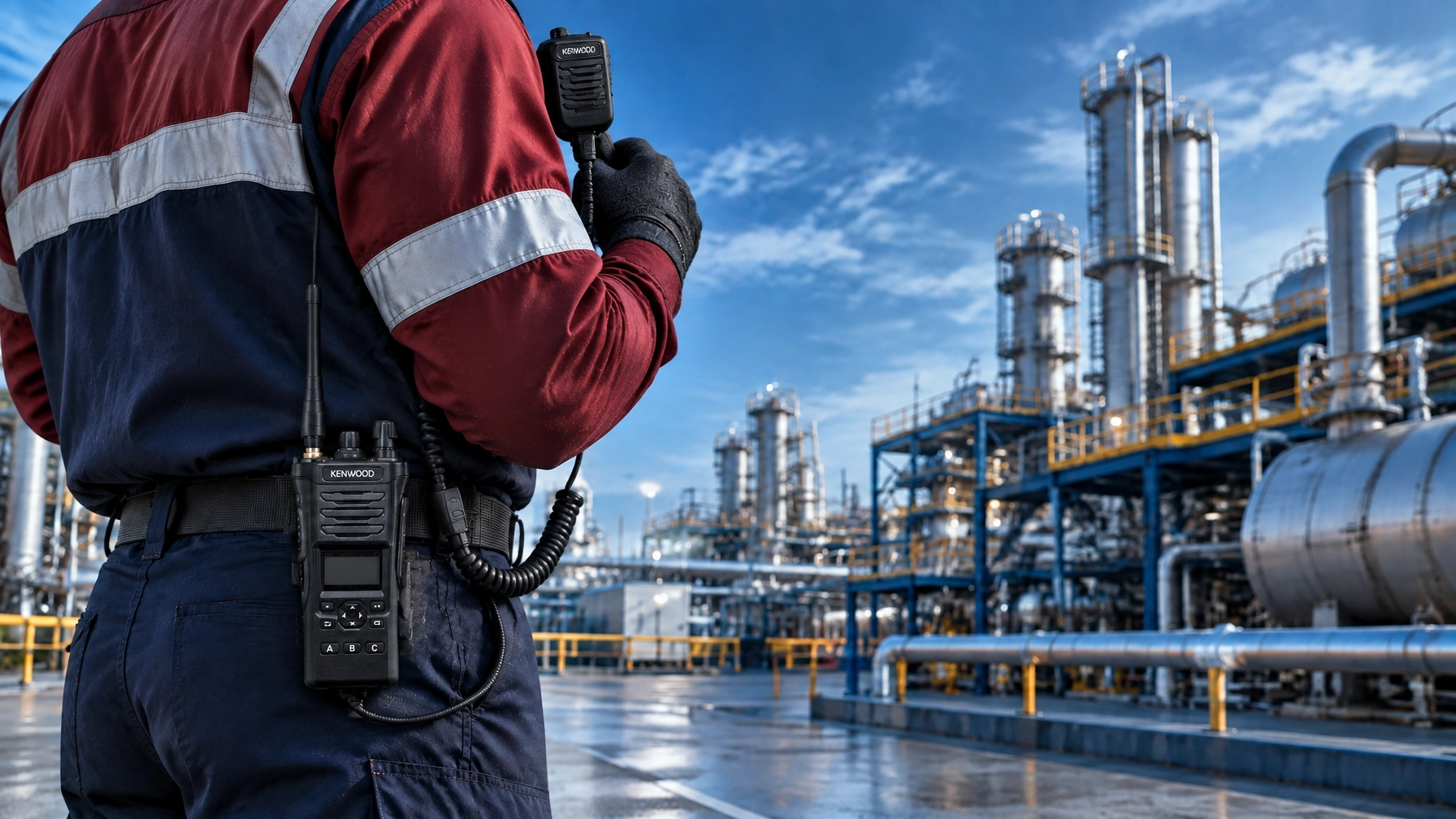
Mission-critical communication must remain dependable without creating an additional hazard. In some industrial environments, a standard professional radio may not be appropriate. If flammable gas, vapor, combustible dust, or ignitable fibers may be present, the radio equipment may need approval for that specific hazardous location.
Intrinsically safe two-way radios are designed for those conditions. They are specialized communication tools for selected industrial, manufacturing, fuel, utility, chemical, energy, and other hazardous work areas.
They are not required for every industrial customer. The correct equipment depends on the site classification, materials present, operating conditions, and the equipment’s approval documentation.
What Does “Intrinsically Safe” Mean?
In plain English, intrinsic safety means the equipment is designed to limit electrical and thermal energy so it does not become an ignition source under the conditions covered by its approval.
An intrinsically safe radio is engineered to control risks such as:
- Electrical sparks.
- Excessive heat.
- Stored energy in circuits or components.
- Battery-related ignition sources.
- Fault conditions addressed by the equipment approval.
The goal is to prevent the radio from igniting a flammable atmosphere when used within the approved conditions.
That does not make the radio indestructible. It does not make the work area safe by itself. It does not protect a worker from chemical exposure, high temperatures, pressure, moving machinery, falls, electrical shock, or poor work practices.
Intrinsic safety is one part of a larger site-safety program.
Where May Intrinsically Safe Radios Be Needed?
The need usually begins with the facility’s hazardous-location assessment. Examples may include:
- Fuel storage and distribution areas.
- Refineries and chemical processing facilities.
- Gas-handling operations.
- Paint and coating environments.
- Certain utility and energy facilities.
- Manufacturing areas where combustible dust may accumulate.
- Grain, food, wood, metal, or pharmaceutical processing areas.
- Industrial maintenance areas with a documented ignition risk.
- Temporary work zones created during maintenance or shutdowns.
Some industrial crews may work in both ordinary and hazardous areas during the same shift. That does not automatically mean every radio in the operation must be intrinsically safe. It means the employer must identify where the equipment will be used and select a system that matches those conditions.
Facility documentation and the responsible safety professionals determine the requirement. A radio dealer should not guess.
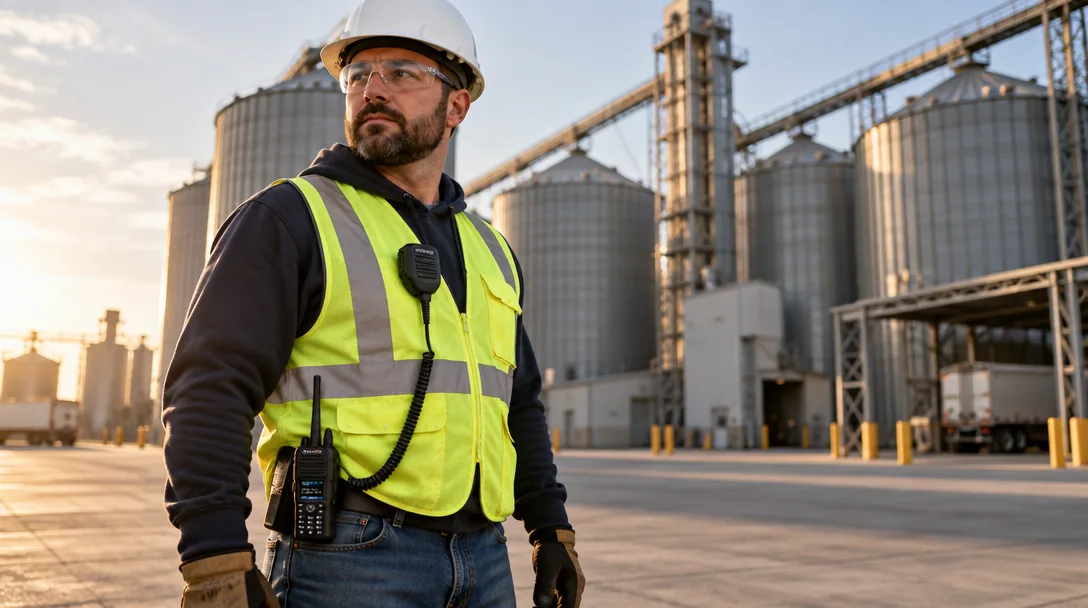
Hazardous-Location Classifications Must Match the Equipment
Hazardous-location requirements may be described using different classification systems. In the United States, a facility may use Class, Division, and Group terminology. International operations may use zone-based terminology.
The important point is simple:
The radio approval must match the location where the radio will operate.
Before purchasing equipment, confirm:
- The type of hazard present.
- Whether the hazard involves gas, vapor, dust, fibers, or another material.
- The facility’s classification or zone designation.
- Whether the hazard may be present during normal operation or only under abnormal conditions.
- The required temperature and environmental limits.
- Whether the radio will be used indoors, outdoors, in vehicles, or across multiple areas.
- Whether the equipment must meet a specific approval scheme.
A radio marked for one hazardous environment may not be approved for another. Similar-looking labels are not interchangeable.
For example, manufacturer documentation for certain Kenwood intrinsically safe radio models may state: “Approved by CSA-us International Inc. for Classes I, II & III, Div. 1, Groups D, E, F, G and are also approved for non-incendive use in Class I, Div. 2, Groups A, B, C hazardous locations.”
That type of language must be read carefully. It applies only to the specific rated radio models identified in the manufacturer’s documentation and only when used as the complete approved combination of radio, battery, antenna, speaker microphone, and other listed accessories. It does not apply to a radio line generally, and it should not be treated as Comserv’s own certification or as compliance advice.
The facility’s EHS department, safety officer, engineer, authority having jurisdiction, compliance officer, or counsel should own the final determination. Comserv can help review the communication requirements and manufacturer documentation, but no dealer should replace the facility’s formal safety process.
The Approval Applies to the Complete Equipment Combination
One of the most important details is often overlooked: intrinsic-safety approval generally applies to an approved combination, not simply to the radio housing.
The approved configuration may include:
- The radio model.
- The battery type.
- A remote speaker microphone.
- A headset or other audio accessory.
- Charging equipment and charging procedures.
- Approved repair and maintenance processes.
- Other connected or installed components listed by the manufacturer.
A standard battery on an approved radio does not automatically create an approved system. A generic speaker microphone may also be outside the approval. Even an accessory that fits physically may not be approved for use in the hazardous location.
This is where many purchasing problems begin. The equipment may look compatible. It may power on. It may communicate clearly. That does not prove that the complete combination is approved for the site.
Use the manufacturer’s current documentation for the exact radio, battery, accessory, and location requirements.
What Intrinsic Safety Does Not Protect Against
Intrinsic safety is specific. It addresses ignition risk from the equipment within the approved conditions. It does not provide general protection from every workplace hazard.
An intrinsically safe radio does not:
- Replace hazardous-location training.
- Eliminate the need for gas detection or ventilation.
- Protect against toxic substances.
- Protect against impact or crushing.
- Guarantee coverage inside a steel or concrete structure.
- Guarantee communication during a power outage.
- Make a damaged radio safe to use.
- Permit unapproved accessories.
- Remove the need for radio licensing where licensing applies.
- Replace the facility’s emergency procedures.
- Guarantee that cellular service will be available.
A cracked housing, damaged connector, compromised battery, or unauthorized repair should take the radio out of service until it is evaluated under the manufacturer’s procedures.
Comserv cannot repair intrinsically safe radios in our own shop — that work goes back to the manufacturer under its approved process. What we do handle is everything around it: shipping the failed unit to the manufacturer, and testing it when it returns so you know it’s ready for service. A repair outside that process can void the hazardous-location approval, even if the radio appears to work afterward.
Battery Handling Requires Discipline
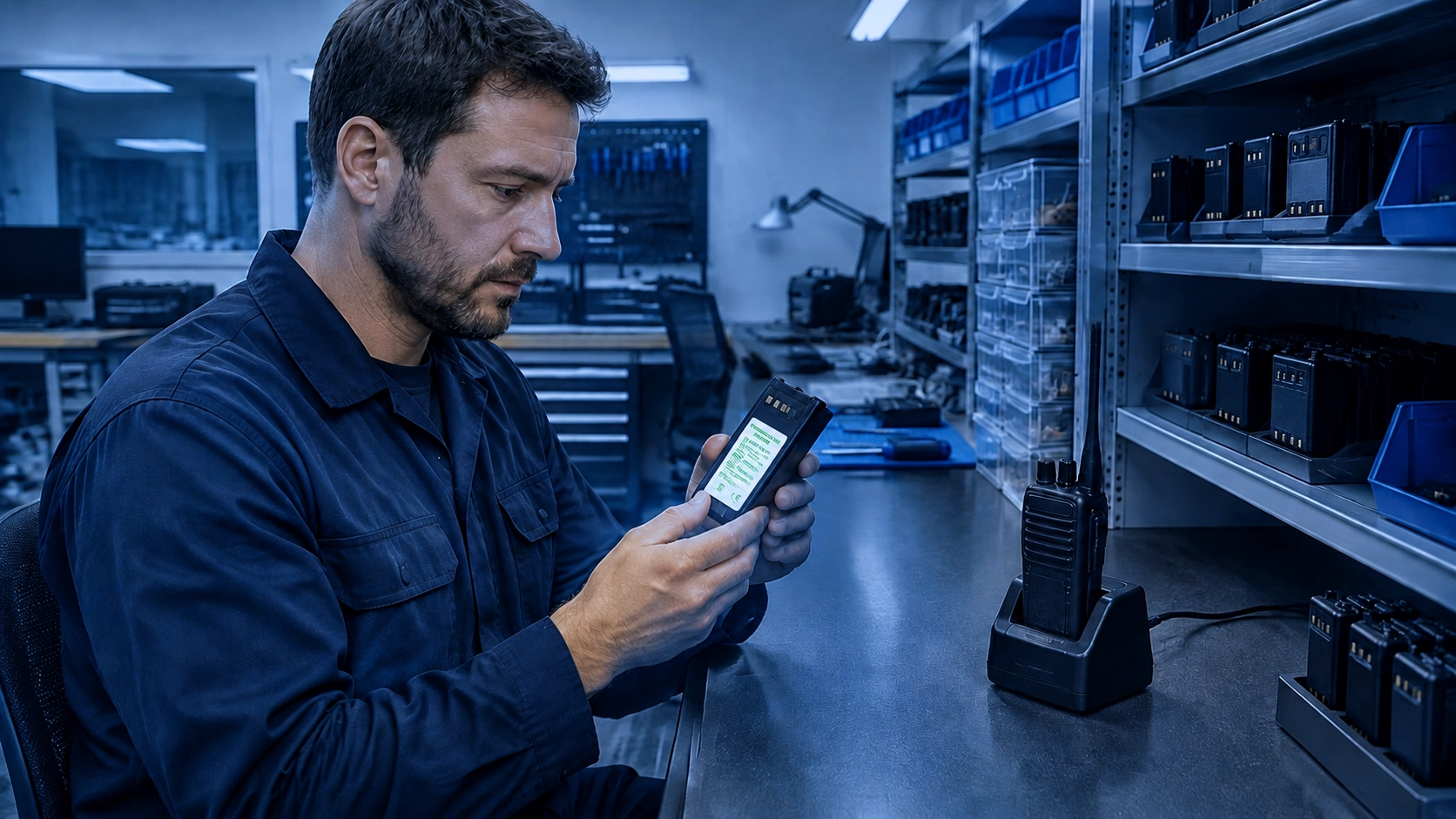
Battery management matters in every radio program. It becomes especially important when intrinsically safe equipment is involved.
- Industrial crews: Charge and replace batteries only in approved, known non-hazardous areas unless the manufacturer’s documentation specifically states otherwise.
- Public safety agencies: Keep approved batteries matched to the correct radio fleet. Do not mix batteries between standard and specialized equipment without verification.
- Commercial fleets: Store spare batteries correctly and document which equipment belongs in hazardous work zones.
- Schools: If maintenance, transportation, or career-technical programs use professional radios, keep charging procedures and damaged-battery reporting clear.
Users should be trained to report swollen, cracked, leaking, overheated, or physically damaged batteries. A radio should not return to hazardous service simply because it still turns on.
Integrated Communication Systems Matter
A hazardous-location radio is only one part of the communication plan. Industrial operations may also need an integrated system that includes:
- Portable and mobile two-way radios.
- Repeaters and in-building coverage.
- Dispatch consoles.
- Emergency alert functions.
- GPS for selected vehicles or assets.
- Maintenance and programming support.
- Backup communication procedures.
- Ongoing user training.
The priority is straightforward. Match the radio equipment to the hazardous-location requirement, then make sure the larger system supports reliable daily operations, maintenance, and incident coordination.
How Comserv Can Help
Comserv Services supports industrial, manufacturing, utility, fuel, public safety, education, church, and commercial organizations across the Mid-South.
Our team can help with:
- Facility communication assessments.
- Professional radio selection.
- Approval-document review.
- Channel and talkgroup programming.
- Repeater and in-building coverage planning.
- Integrated system design.
- Installation and commissioning.
- Preventive maintenance for standard radio systems and accessories, with full handling of factory repair and re-certification returns for approved intrinsically safe units.
- Battery and accessory management.
- Licensing and frequency-coordination assistance.
- Ongoing training as technology changes across P25, DMR, NXDN, GPS, and coverage systems.
Learn more about Comserv industrial and manufacturing communication solutions, professional two-way radios, and system installation services. To discuss a specific facility, request a facility assessment or call (901) 767-6800.
Always verify licensing and hazardous-location requirements correctly, regardless of the level of FCC enforcement in a particular area.
Comserv does not provide legal advice or set policy. The facility’s compliance officer, safety professionals, or counsel own the final determination.
Common Questions
Does every industrial facility need intrinsically safe radios?
No. The need depends on the facility’s hazardous-location classification, materials, operating conditions, and work procedures. Many industrial areas do not require intrinsically safe equipment.
Is an intrinsically safe radio explosion-proof?
That wording can be misleading. Intrinsic safety is a specific protection method with specific approval conditions. It does not mean the radio can withstand every explosion or hazard.
Can I use any battery with an intrinsically safe radio?
No. Use only the battery and accessories listed as approved for that radio and hazardous-location application.
Can intrinsically safe radios be charged anywhere?
Follow the manufacturer’s charging instructions and site procedures. In many applications, charging and battery replacement must occur in a known non-hazardous area.
Can Comserv repair my intrinsically safe radio?
Not in-house — and that’s by design, not a limitation we can work around. An intrinsically safe radio that fails must go back to the manufacturer (Kenwood or Motorola) for repair and re-certification, because any repair outside the approved factory process voids the hazardous-location approval, even if the radio works fine afterward. What Comserv does handle is the entire process for you: we get the unit shipped to the manufacturer and put it on the bench to test when it comes back, so you’re not left managing the paperwork or guessing whether it’s ready for service. Expect factory repair to take longer and cost more than standard in-shop service on a non-IS radio — that extra turnaround and cost come from the certification process, not the repair itself.
Can Comserv tell me which certification my facility needs?
Comserv can help identify the communication equipment and documentation that may fit your application. The facility’s safety professionals, compliance officer, engineer, authority having jurisdiction, or counsel must determine the final hazardous-location requirements.
Do intrinsically safe radios provide better coverage?
Not automatically. Intrinsic safety addresses ignition risk. Coverage depends on radio frequency, antenna design, building materials, repeater placement, system configuration, and site conditions.
Do I still need a radio license?
Possibly. Radio licensing requirements still apply where applicable. Comserv can assist with licensing and frequency coordination as part of a complete system review.
Can an intrinsically safe radio communicate with our existing radios?
It may, depending on frequency, protocol, programming, system design, and approved configuration. Compatibility should be verified before equipment is purchased or placed in service.