
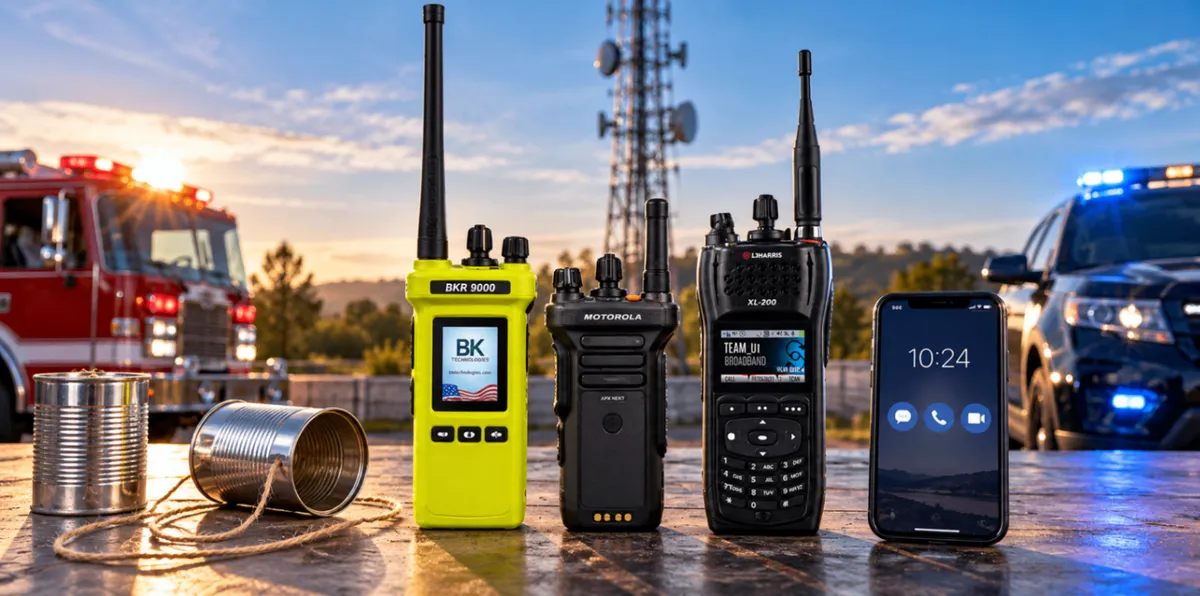
For first responders, reliable communication is mission-critical. A backup plan should make it clear how dispatch, field units, and command will stay coordinated when a primary system is degraded or unavailable.
A resilient communications stack is more than a spare radio. It combines a primary radio system, planned interoperability channels, independent fallback paths, and higher-level options such as vehicle-based repeaters or satellite communications. Each layer needs clear activation rules, trained users, and regular testing.
This guide focuses on those layers. For a broader overview of redundant emergency communications, see “Plan A Shouldn’t Do All the Heavy Lifting”. For background on the P25 standard, see “The Evolution of P25: Public Safety’s Radio Standard”.
Build the Plan Around PACE
A practical framework is PACE: Primary, Alternate, Contingency, Emergency. The goal is to identify what users should do next, who authorizes a change, and how the agency confirms the new path is working.
For every layer, document:
- The communication method and its purpose.
- Who uses it and who coordinates it.
- What failure triggers a switch.
- Required channels, programming, permissions, and equipment.
- How users acknowledge messages and report status.
- What dependencies the option shares with the primary system.
A backup that depends on the same power, site, backhaul, or network as the primary may fail at the same time. Resilience comes from planning for different failure modes, not simply adding another device.
1. Primary: The Everyday Radio System
The primary system is the normal working path for dispatch and field communications. It may use a P25 trunked or conventional network, with defined talkgroups or channels, dispatch consoles, and site infrastructure.
Document the system’s operating procedures, coverage limitations, backup power, maintenance responsibilities, and escalation contacts. Ensure portable and mobile radios are programmed for the approved channels and groups. Include command, tactical, mutual-aid, and direct-channel options in the plan where they are authorized and operationally appropriate.
The system should be treated as an integrated whole. Radios, dispatch consoles, repeaters, antennas, power, in-building coverage, programming, and user training all affect performance. A portable radio cannot overcome every coverage gap, and a radio with the right features is not useful if users do not know how to reach the right talkgroup.
2. Alternate: Interoperability Channels and Shared Procedures
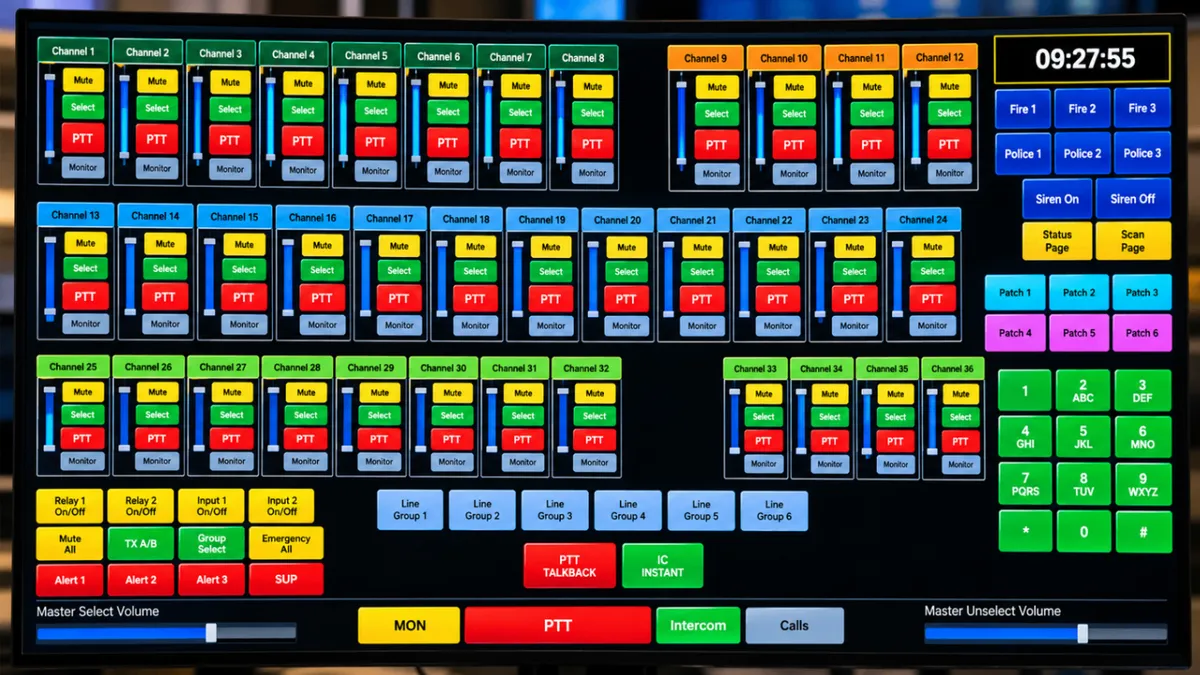
Interoperability channels give agencies a planned way to coordinate across jurisdictions or radio systems. They are not automatically usable just because a channel appears in a national guide. Frequency authorization, local programming, channel availability, radio configuration, encryption, and regional procedures all matter.
Use your agency’s current interoperability plan and the applicable National Interoperability Field Operations Guide (NIFOG) as references. Confirm details with the communications coordinator and neighboring agencies before an incident. A communications plan should specify:
- The channel or talkgroup and its operational purpose.
- Which agencies or units are assigned to it.
- Required mode, tones or NAC, and encryption status.
- Whether a console patch or gateway is needed.
- Who activates and announces a patch.
- The procedure for ending the patch and returning to normal channels.
Shared frequencies alone do not guarantee communications. Equipment and settings must match, and responders need to practice using the plan. Agencies should also handle radio licensing and frequency coordination correctly, regardless of how actively a requirement is enforced.
3. Contingency: Independent Fallback Paths
If the primary network is unavailable, a contingency path should not depend on the same failed infrastructure. Options may include:
- Direct or simplex radio channels. Radios communicate directly without relying on a repeater or trunked site. Range is limited by terrain, buildings, antenna placement, and radio conditions, so assign roles and operating areas in advance.
- A separate conventional repeater or radio system. This can provide another coverage path if it has independent infrastructure and power.
- A neighboring agency’s system. Use only when access, programming, permissions, and operating procedures have been agreed on beforehand.
- A radio gateway or console patch. Gateways can connect otherwise separate systems, but they need a tested configuration and a clear operator procedure.
- Cellular push-to-talk or other broadband tools. These can provide useful additional capacity when available. They should not be treated as a guaranteed substitute for radio.
Cellular networks are not designed to handle unlimited simultaneous call volume from a limited area during a disaster or active-shooter event. Mobile data and cellular voice can support operations, but a public-safety plan should account for congestion, coverage loss, and power or network outages.
The same principle applies to dispatch. A remote or backup dispatch position can support continuity, but verify what it depends on. If it relies on the same internet connection, power source, or facility as the primary position, it may not be independent.
4. Emergency: Vehicle-Based Repeaters and Satellite
When local infrastructure is damaged or ordinary coverage cannot support the operation, agencies may deploy more specialized options.
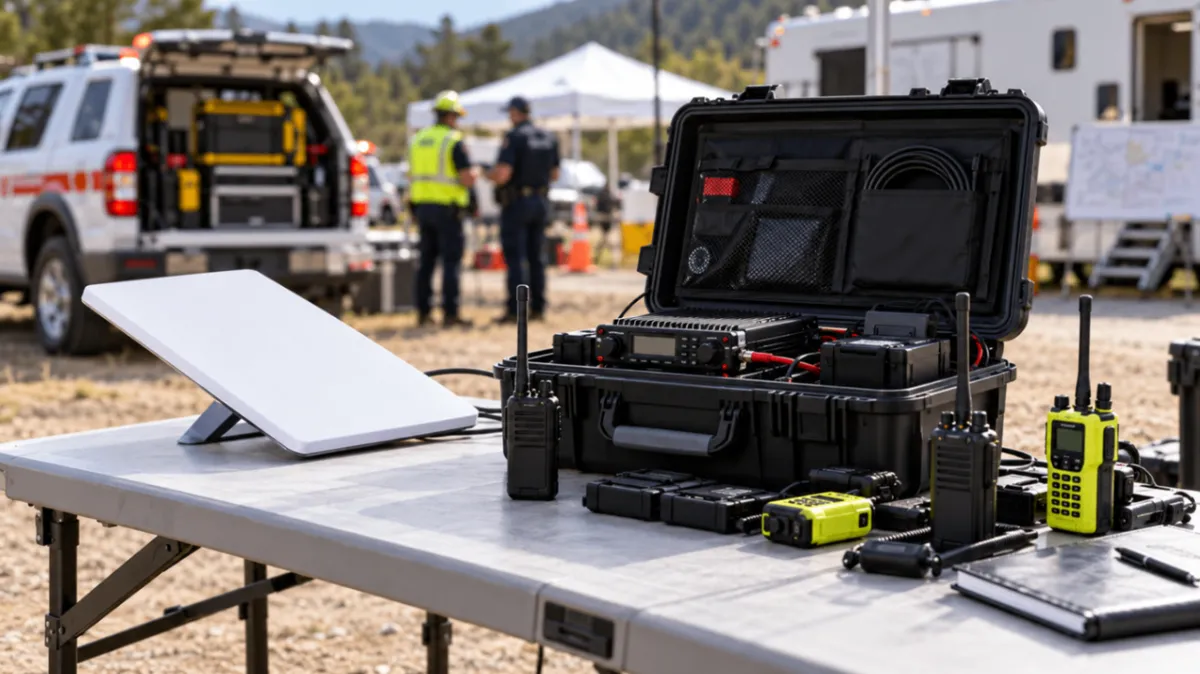
A vehicle-based repeater can relay portable-radio traffic and improve communications within a defined area. It can be useful when terrain, a damaged fixed site, or an incident location creates a coverage problem. It does not automatically provide wide-area coverage or interoperability. Operators need instructions for placement, setup, power, channel assignment, and coordination with other systems.
Satellite communications can provide a separate path when terrestrial networks are unavailable. Depending on the equipment and service, satellite options may support voice or data for command, emergency management, or field coordination. Plan for clear sky access, power, equipment storage, airtime, trained operators, and tested call procedures. Satellite should be an intentional part of the emergency layer, not a device left in a case with an expired plan.
Make Drills Part of the System
A written plan is only useful if people can carry it out under pressure. Run failure drills with all employees and responders who may be involved. Include dispatch, supervisors, field units, support staff, and relevant partner agencies.
One scenario to practice: high winds damage a site antenna and degrade repeater coverage. Teams should identify the change, switch to the assigned direct channel, confirm contact, and follow the agreed check-in procedure. Debrief what worked and update the plan.
A practical lesson from vehicle installations is that a radio can pass a bench test and still be difficult to use if the antenna, cabling, power, mounting, or control position is poorly planned. Review the full installation and operator workflow together. The less time people spend searching for a control or a channel label, the more time they can spend coordinating the response.
Keep batteries and accessories ready, too. Public safety agencies, industrial crews, commercial fleets, and schools should inspect, charge, rotate, and replace radio batteries according to equipment guidance. A discharged, damaged, or unavailable battery can remove a user from the communications plan at the wrong time. Keep approved spares and chargers accessible, and include battery checks in drills.
Plan for the Systems You Have, and the Ones You May Add
A resilient system needs ongoing technical support and training as communications technology changes. Agencies may need to coordinate equipment and procedures across P25, DMR, NXDN, GPS, dispatch, and in-building coverage. The goal is not to adopt every technology. It is to ensure the chosen equipment works with the agency’s operational requirements and the systems used by its partners.
This planning also benefits support organizations. During a major storm, for example, an agency may coordinate dispatch and field responders while commercial fleets, industrial crews, and school staff manage their own people and locations. Churches may need calm, clear procedures for a missing-child report during a service or for communicating during severe weather. Each organization should use an appropriate plan and trained personnel; the scenario should be practiced without creating alarm.
How Comserv Services Can Help
Comserv Services supports public-safety agencies and other Mid-South organizations with equipment selection, system design, installation, programming, service, and ongoing support. Our team brings more than 150 years of combined experience and works with integrated communications systems, not just individual radios.
We can help assess radio coverage, dispatch and interoperability needs, vehicle installations, maintenance, and procurement specifications. We also support evolving technologies, including P25, DMR, NXDN, GPS, and in-building coverage. Explore public safety communications support, two-way radio systems, dispatch consoles, vehicle upfitting, and service and maintenance.
Request an assessment or consultation by calling 901-767-6800.
Common Questions
Is a second radio system enough to create a backup?
Not by itself. Check whether the second system relies on the same sites, power, backhaul, or provider as the primary. A useful backup has a clear purpose, documented activation steps, compatible equipment, and trained users.
Should first responders use cell phones as their emergency backup?
Cellular devices can support coordination, but they should not be the only fallback. Networks can be congested or unavailable during a disaster or other high-demand incident. Include an independent radio path and test how users will switch to it.
What is the difference between an interoperability channel and a fallback channel?
An interoperability channel is planned for communication across agencies or systems. A fallback channel is an alternate operating path when the primary method fails. One channel might serve both purposes if it is authorized, programmed, and included in the agency’s procedures.
Who makes the final decision about licensing and agency policy?
Comserv Services does not provide legal advice or set policy. The agency’s compliance officer or communications coordinator owns the final call.